
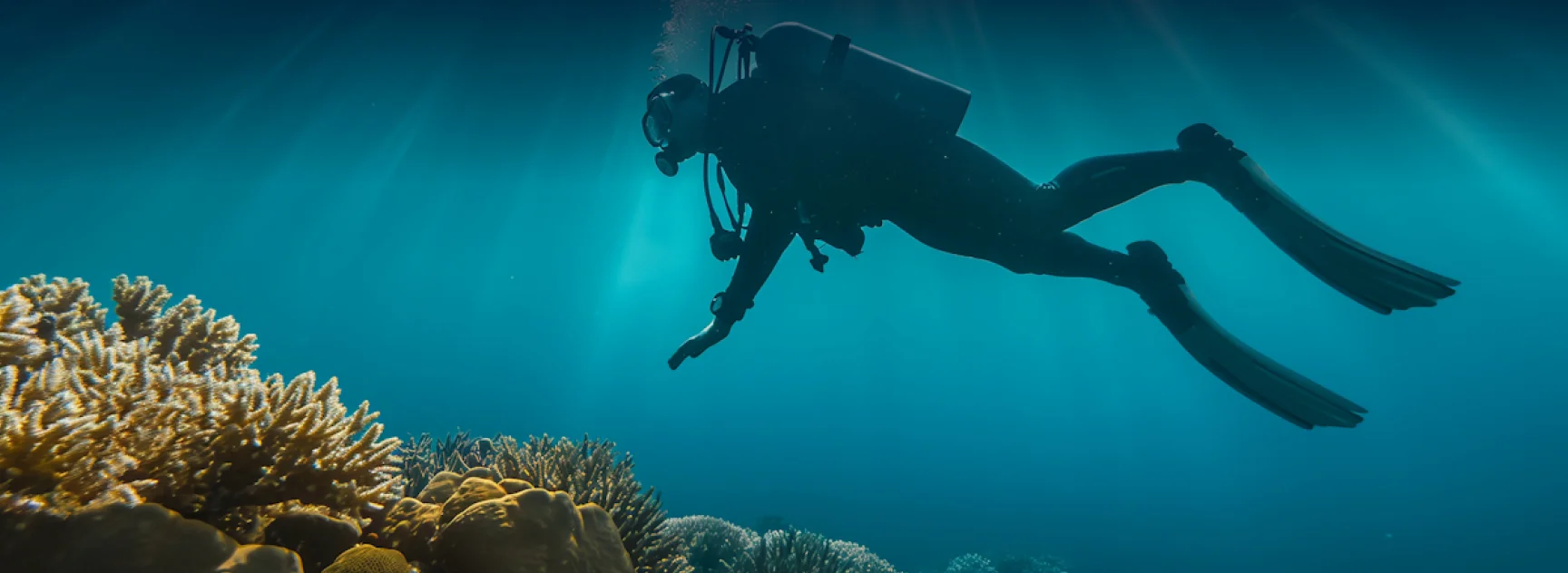

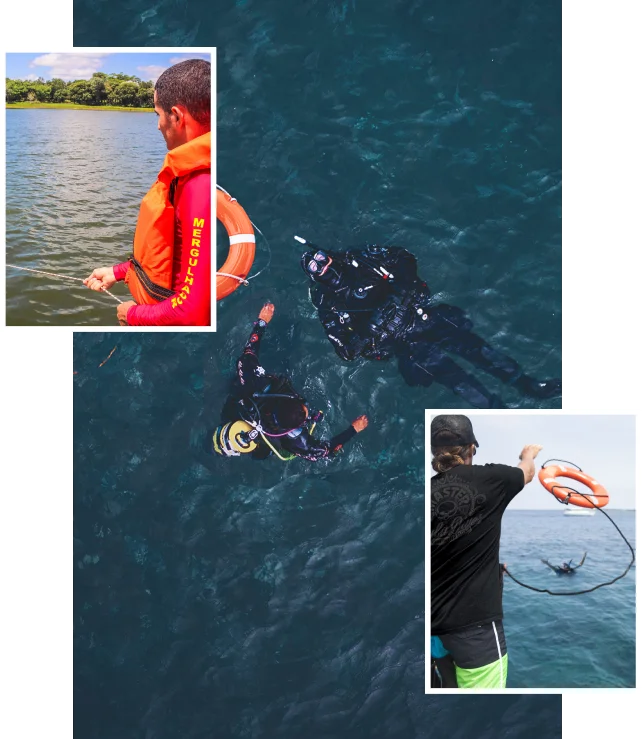
Often described as the most demanding, rewarding and fun certification by those who have earned it, the PADI Rescue Diver Course shifts your focus from simply enjoying your dives to becoming a confident, responsible, and proactive diver. Through a mix of theory, confined water practice, and open water scenarios, you'll develop the awareness, confidence, and skills to prevent and manage potential problems, and handle diving emergencies with calm and efficiency both at the surface and underwater.
Whether you're looking to strengthen your skills as a recreational diver or preparing for the first step toward a professional diving career, the Rescue Diver Course will transform the way you dive - and make you the kind of buddy everyone wants in the water.
Minimum Age: 12 years
Duration: 3-4 days
No. of Dives: 3
Maximum Depth: 12 metres/40 feet
Prerequisites:
Minimum Age: 12 years
Duration: 3-4 days
No. of Dives: 3
Maximum Depth: 12 metres/40 feet
Prerequisites:

Students typically take 3 days to complete the Rescue Diver Course, with a focus on individual skill mastery. However, we"re flexible about schedules and can adapt it to suit your travel plans. Taught as a mix of theory & hands-on training, the course comprises the following sections:
Knowledge development with a focus on dive theory, self-rescue techniques, emergency prevention and management, and first aid procedures specific to diving. Once a course is booked, we assign e-learning materials at the earliest to help you complete theory sections at your pace & convenience, prior to arrival at the dive centre. This is highly recommended as it also allows us to allocate more time for in-water training.
Confined water training in the pool, where we introduce core rescue skills such as responding to tired or panicked divers, managing equipment issues, and practicing safe approaches.
Open water dives where you put your skills into action with realistic rescue exercises and scenario-based training in the ocean. Students also need to prepare an emergency assistance plan for a dive site as part of course work.
The first day is reserved for pool training sessions, while open water dives are conducted on the remaining days. We usually conduct Rescue Diver Courses according to the following schedule:
Day 1 (7am-5pm): Classroom & pool training sessions covering self-rescue techniques & rescue exercises.
Days 2 & 3 (7am-3pm): Open water dives to demonstrate assistance techniques, participate in rescue scenarios, respond to mock emergencies & apply your skills in real time.
We recommend that you visit us at the dive center a day before starting your course to complete paperwork, & get yourself fitted for the equipment you will be using for the next few fun-filled days! Additionally, if you have not dived in over 6 months, we recommend joining a skill refresher session prior to starting the course.
We believe becoming a Rescue Diver is a rewarding achievement when the course is tailored to student needs. Everyone comes in with different levels of confidence and training - some are calm in emergencies, while others need more time and practice. That's why our Rescue Diver Course is designed with flexibility, ensuring you get the hands-on training, support, and confidence you need to respond effectively in real-life scenarios.
| Course Option | Days | Dives | Taught By | Best For | Price |
|---|---|---|---|---|---|
| Rescue Diver Elite | 4 days | 3 course dives | Course Director: 10+ years' exp |
Newly certified divers with less than 15 logged dives or those diving after a break | ₹50,000 (*18% GST additional) |
| Rescue Diver Pro | 3 days | MSDT & Staff Instructors: 5-10 years' exp |
Those with 25+ logged dives | ₹35,000 (*18% GST additional) | |
| Rescue Diver Essential | Open Water Instructors: 1-5 years' exp |
Those with 35+ logged dives | ₹30,000 (*18% GST additional) |

Not at all. The Rescue Diver course is more about technique, awareness, and problem-solving than brute strength. However, you need to be in general good health to meet course requirements. You'll learn efficient ways to manage situations, always under the close guidance of your instructor.
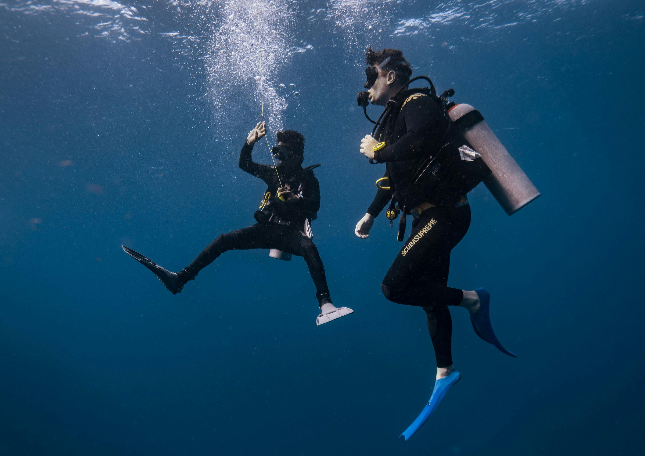
While the Rescue Diver course is serious and focused, it's also a lot of fun! Most Instructors say it is their favorite course to teach, and many divers say it's the most rewarding one they've taken. You'll practice realistic scenarios that build your confidence step by step, under the guidance of your instructor in a safe environment.
The coursework will keep you on your toes throughout, and teach you the right skills to use in emergency situations, irrespective of your size, strength and fitness level.
Expect plenty of laughter between the focused learning, some surprises, and lots of diving along the way. By the end, you'll feel more capable and self-reliant, and be a better dive buddy.
Not necessarily. To start the Rescue Diver course, you need current (within the past 24 months) CPR and first aid training that meets PADI's standards. If your previous training included hands-on practice and covered both primary (CPR) and secondary care (first aid), it may count.
Just share the details of your certification with us and we can confirm if it meets the prerequisite. In case your training doesn't qualify, or if it was an online-only course without practical sessions, you'll need to complete or refresh your EFR training before starting the Rescue Diver Course. And we'll be happy to facilitate this for you at UNA!
We recognise that healthcare professionals like doctors, nurses and paramedics often receive CPR and first aid training during their studies. However, in the years that follow, some medical professionals do not use CPR and first aid skills frequently, causing them to fade over time.
The purpose of Emergency First Response training is to ensure that everyone - regardless of background & experience - has up-to-date, hands-on practice with the latest guidelines. With that in mind, here are a few pointers :
This way, all participants - whether healthcare professionals or not - enter their next level of training with fresh, reliable skills they can confidently use in real-world emergencies.
Absolutely. The PADI Rescue Diver course is often described as the most rewarding course divers ever take because it fundamentally changes the way you dive. Rescue training shifts your perspective from focusing only on yourself to being mindful of those around you. Many divers find this boost in awareness also strengthens their own confidence and comfort underwater.
You'll become more self-reliant, more aware of other divers, and better equipped to prevent small problems from turning into bigger ones. Skills such as self-rescue, improved buoyancy control, situational awareness, and effective emergency response will make every dive - whether it's a once-a-year holiday trip or a regular adventure - safer and more fun.
In short: the Rescue Diver course doesn't just prepare you for emergencies - it makes you a more capable, confident and considerate diver every time you enter the water.
A PADI Rescue Diver certification takes you beyond being a safe diver to becoming a true leader underwater. It's a requirement for professional-level training such as the PADI Divemaster and PADI Instructor courses, as well as the last step before earning the elite PADI Master Scuba Diver rating, achieved by fewer than 2% of divers worldwide. Even if you don't plan to become a dive professional, the Rescue Diver course gives you greater confidence, self-reliance, and the ability to anticipate and manage problems, making every dive safer and more fun for you and your dive buddies.